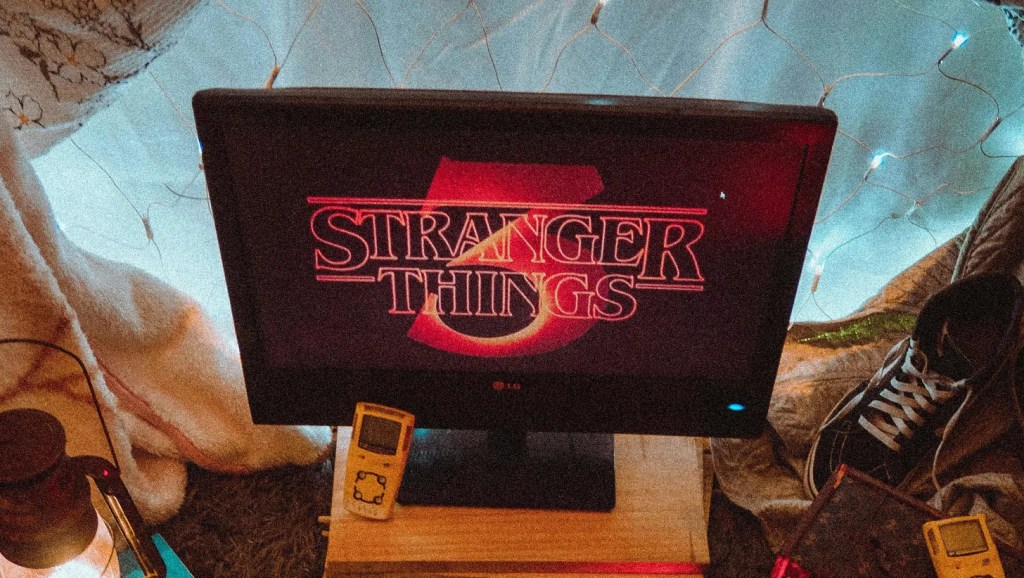
What is “Conformity Gate?”
Conformity Gate is the term the internet has attached to the theory of a secret ninth episode of the final season of Stranger Things releasing on January 7th. Following the finale of the fifth and final season of the show, fans took to their social media to discuss the contents of the titular episode. Many issues were found throughout, particularly plot holes and continuity errors, sparking widespread belief that it was intentional.
In the week since the release of the final episode, various notable issues with the fifth season have been highlighted. Doorknobs inexplicably switching sides, levers changing colours, characters remembering things that do not exist and final battles coming and going with zero inconvenience. This belief has gotten to a point of analyzing social media pages and Netflix search engine results. But, is there any reason to place stock in this theory?
Unfortunately, no, there is little reason to believe such an episode exists. If we look at the logistics of the final season, it wouldn’t be financially intelligent for Netflix to hide the true finale. The eighth and final episode, touted as “The Finale,” was released in movie theatres throughout North America for two days: New Years Eve and New Years Day. On top of this, the streamer spent several months leading up to the finale hyping event. Finally, they chose Christmas day and New Years day as the final two release dates for volume two and the finale respectively. Based on Netflix’s pattern, it would be atypical to release such an important and expensive project randomly on the seventh of a month with no hype or prior announcement. Part of running this kind of business is attracting as many eyeballs as possible to watch your content as soon as possible, and this would not be a recipe for success.
So if it is atypical for this kind of release to happen, and it has rarely if ever happened in the past, why has the internet latched onto this idea so vehemently?
Grief.
How did this happen?
When we experience a negative experience, like losing something or getting sick after eating a specific food, we tend to experience a series of emotions afterwards. In this case, fans of Stranger Things are “grieving” the ending of a beloved show, and are coping with what may be the end of their childhood.
When we grieve, and I am using the concept of grief loosely, we go through five stages: denial, anger, bargaining, depression and acceptance. When it comes to a television show, it is clear that the majority of people won’t become depressed or feel a need to bargain. However, it is the denial and anger stages of grief which apply to the Conformity Gate debacle.
This theory was spawned out of a denying the show has ended. This was derived from either discontentment with the way the finale was constructed or from an inability to accept that it is over. We are seeing a massive amount of people publicly struggle with accepting that this is over, and that it is never coming back, so they deny that fact. They have conjured up a secret episode to give themselves hope, but all they have done is deny their grief over a show.
What began as a series of continuity errors and bad television writing has ballooned into evidence for the existence of a fake episode of television. Game of Thrones fans witnessed their show evolve from all-time great to all-time bad, and Stranger Things fans have experienced the same crushed dreams. But, seeing as this is the same situation as Game of Thrones, a drastically different outcome is the result.
Is this something we should be worried about?
Is there a larger issue in art regarding expectations?
Entertainment is paramount throughout the modern world. Virtually every home on the planet has multiple screens and multiple streaming subscriptions, as well as lives which revolve around film and television. Even in my home, I watched the Stranger Things finale as if it was a big television event—which it was. Although, the infusion of technology and screens into daily life has resulted in our collective attention being drawn to this space. Social media is a key part of this attention hijacking and, while this is a critical and expansive topic, assessing it is critical to understanding the nature of expectations in entertainment.
When we get excited about something in entertainment we like to share it with others. When we get excited, we also create theories about what we think may happen and what we want to happen. In a world with social media, we are also drawn to share these thoughts on a public stage. We also find groups of people with similar thoughts, and we begin to foster belief in what we have theorized. Now, discussing our theories and thoughts on art is valuable, and it is a facet in many of our lives. Yet, it can be extremely impactful.
When we begin to practice these patterns of behaviour, we begin to create expectations in our minds. If a large number of people believe something to be true, we begin to believe it must be true, especially if we had already begun theorizing about it ourselves. Then, when we go to an experience of art with our expectations in mind, if it doesn’t fulfill those theories and thoughts then we leave disappointed or deflated. In addition, when we place so much stock into these beliefs and theories, we feel betrayed when they fail to materialize. This is the pattern of behaviour we are observing with Conformity Gate.
My concern is that these situations will become more prominent and common in the future, especially regarding popular intellectual properties like the Marvel brand. Imagine if the internet began theorizing on Avengers: Doomsday and decided that a specific plot point is bound to happen. Now, imagine that belief grew to encompass social media and was permeating through society. Finally, imagine if the masses arrive at the movie theatre in December 2026 and that plot point does not materialize. The world would be devastated.
Stranger Things has highlighted how mass numbers of individuals can influence the perception of an episode of television (episode 7, anyone?). So, if we know that theories can be blown out of proportion online, and that the perception of this art can be tainted by a small subsection of people, is there reason for concern over the future of entertainment?
Yes, a significant concern.
What does “Conformity Gate” say about the future of film, television and endings?
While the impact of this trend may not have a huge impact on most films, particularly those that are not endings/finales, it is critical to keep these things in mind. Art is extremely subjective, and it always has been. In fact, the subjectivity of art has always been the beauty of it. The film and television pundit John Campea always states, “Just because I didn’t like the film doesn’t mean you won’t, and I really hope you do like it.” This encapsulates the critical nature of art: it fosters discussion and debate. No singular piece of artistic creation will ever satisfy one-hundred-percent of individuals, and it never should. Stranger Things is no exception to this rule, and neither is Marvel or any other intellectual property.
Despite this, the future of artistic interpretation and consumption faces some real challenges. If the internet will “collectively” decide on the value of art through the satisfaction of expectations then no art will ever be successful. In 2007’s American Gangster, Frank Lucas (played by Denzel Washington) says, “The loudest one in the room is the weakest one in the room.” The word “weak” may be interchangeable for another term (“most naive” anyone?), however the concept remains—the loudest are capable of influencing others, and those who are influenced join the loudest crowd. This influence train continues down the tracks only to arrive at disappointment and resentment station, and our art pays the fare. This is a dangerous trend to follow, and it is critical that we return to a culture of independent thought and abandon the group think that has fostered mass hysteria.
What will happen to the Duffer Brothers’ career if “Conformity Gate” isn’t real?
Unfortunately, the Duffer Brothers are going to have a rough Thursday morning no matter what happens in the future. There is no time left for the Conformity Gate crowd to set aside their expectations, and the career of the Stranger Things’ creators is on the line.
That is an exaggeration, to be honest. The likelihood that the Duffer’s careers will die is low, but it is not zero. There is a chance that when a ninth episode of Stranger Things’ fifth season does not release the Duffer Brothers will face such significant backlash their reputations will be forever altered.
Why would this be? Well, this entire theory, the whole Conformity Gate debacle, is based on the terrible writing and inexcusable continuity errors committed throughout the fifth season. When social media becomes inundated with a theory born out of your lacklustre television writing it is bound to be noticed, and crucially it is bound to be remembered. No studio executive will forget that your fundamentally bad writing was the backbone for a theory constructed around correcting your mistakes. This could have a terrible impact on the career of the Duffer Brothers, and it is hard to find a reason to defend it.
David Benioff and D. B. Weiss have done little of note since their disastrous Game of Thrones finale, and it is obvious why. When the world collectively decides your writing is so inadequate it ruins a beloved intellectual property there is bound to be an impact. When this happens and a theory becomes so popular it grabs the world’s attention, the impact is certain to be substantial. I do not know what impact Conformity Gate will have on the Duffer’s career, and I do not wish any negative outcomes for them, but the coming number of days are going to be revelatory for their future.
What impact, if any, do you think “Conformity Gate” will have on art and entertainment?
 Owen S.V. Martens
Leave a comment